
Koshas: The Five Sheaths of Being
Like peeling the layers of an onion to reach its innermost core, the yogic concept of the koshas describes five interconnected layers of our being, moving from the physical body to increasingly subtle aspects of ourselves.
The concept originates in the ancient Taittiriya Upanishad, which describes five sheaths surrounding the deepest Self, or Atman. They are known as annamaya, pranamaya, manomaya, vijnanamaya and anandamaya kosha.
Rather than seeing body, breath, mind and inner awareness as separate, the koshas offer a holistic way of understanding ourselves. Each layer influences the others, and yogic tradition encourages us to cultivate awareness of them all.
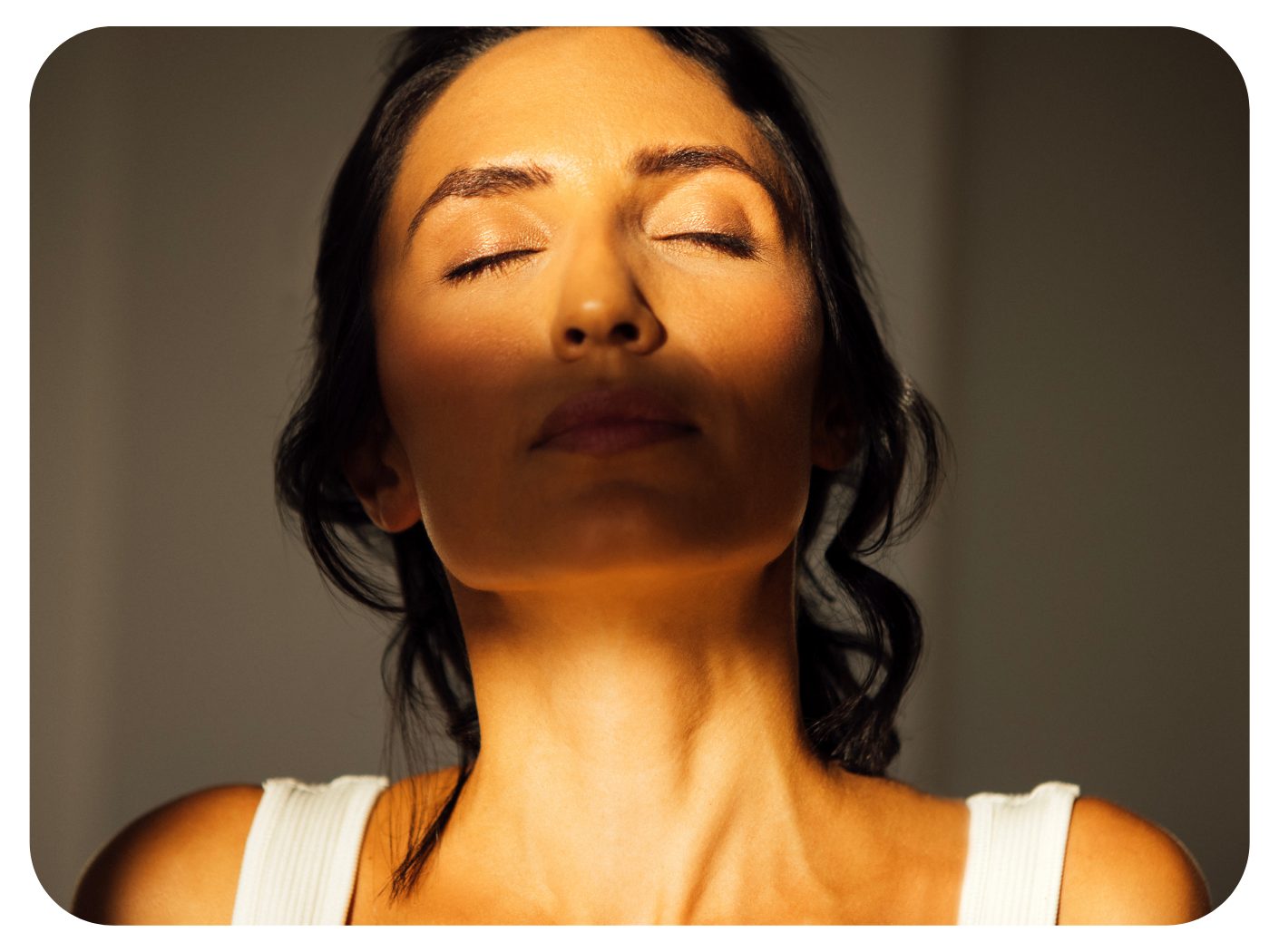
A holistic yoga practice can touch every one of the Koshas to reach calmness.
What are the five koshas?
1. Annamaya kosha: the physical body
The outermost layer is annamaya kosha, the physical body — our flesh, bones, muscles and organs.
Anna means “food”, while maya in this context conveys the idea of being composed of or pervaded by something. Annamaya kosha is therefore often translated as the food sheath: the physical body that is nourished and sustained by food.
This is perhaps the kosha we are most accustomed to caring for. Nutritious food, movement, restorative sleep and physical yoga practices can all help support the health of the physical body.
2. Pranamaya kosha: the vital energy
Beneath the physical body lies pranamaya kosha, the sheath associated with prana, or vital life force.
Prana is closely associated with the breath, but in yogic philosophy it encompasses something broader: the vital principle that animates life.
This is why pranayama, or yogic breathwork, plays such an important role in yoga. By becoming more conscious of the breath and learning to regulate it, we begin to explore this subtler layer of ourselves.
Think about how naturally your breathing changes depending on how you feel. Anxiety can make the breath short and shallow, while calmness tends to slow and deepen it. Working with the breath can therefore become a bridge between the physical body and the mind.
3. Manomaya kosha: the mental and emotional body
The third layer is manomaya kosha, the sheath of the mind.
Manas refers to the mind and its processes of thought, perception and response. This kosha encompasses our thoughts, emotions and sensory impressions — the constant stream of information we receive from the world around us and the reactions it creates within us.
Meditation, mindfulness and conscious withdrawal from constant stimulation can help us become more aware of this layer.
Instead of trying to eliminate thoughts, the aim is to observe them with greater clarity. Over time, this awareness may help us create a little more space between what happens to us and how we respond.
4. Vijnanamaya kosha: wisdom and discernment
The fourth sheath is vijnanamaya kosha, often translated as the wisdom, knowledge or discernment sheath.
This is the part of ourselves capable of observing, understanding and making conscious choices rather than simply reacting out of habit or instinct.
Vijnanamaya kosha is closely associated with deeper knowledge, judgment and discernment. In yogic philosophy, it is also connected with qualities such as truth, faith and ethical awareness.
We can cultivate this layer through self-reflection, meditation, contemplation and the study of philosophical or spiritual teachings. It is the inner intelligence that allows us to ask not simply, “What do I want?” but also, “What is the right or meaningful thing to do?”
When this aspect of ourselves becomes clearer, we may find it easier to remain thoughtful and composed even when confronted with difficult situations.
5. Anandamaya kosha: the bliss sheath
The innermost of the five koshas is anandamaya kosha.
Ananda means bliss, joy or deep contentment. Unlike the temporary pleasure we might experience from something happening around us, ananda refers to a more profound state of inner peace.
This does not mean living in a permanent state of happiness or becoming detached from everyday life. Rather, anandamaya kosha represents the most subtle of the five sheaths and points toward an experience of stillness and contentment beyond the constant activity of the body and mind.
Practices such as meditation, contemplation, devotion and selfless action are traditionally associated with turning our awareness inward and moving toward this subtler state.
Importantly, in Vedantic philosophy even anandamaya kosha is still considered a sheath. The deepest Self, or Atman, ultimately lies beyond all five koshas.
The koshas and the three bodies
The five koshas are also sometimes related to another Vedantic framework known as the three bodies.
In this model, the physical or gross body (sthula sharira) corresponds to annamaya kosha. The subtle body (sukshma sharira) encompasses pranamaya, manomaya and vijnanamaya koshas, while the causal body (karana sharira) is associated with anandamaya kosha.
Both frameworks offer different ways of exploring the same fundamental question: Who are we beyond the physical body?
The ultimate goal: moving from body to bliss
A holistic yoga practice can touch every one of these layers.
Physical practices such as Hatha or Vinyasa yoga work with the body. Pranayama brings awareness to the breath and vital energy. Meditation and mindfulness help us observe the workings of the mind, while self-reflection and philosophical study cultivate discernment and wisdom.
The koshas remind us that well-being is more than physical fitness alone. How we breathe, what we think, how we respond to the world and how connected we feel to something deeper can all be part of the picture.
You don't need to master all five layers — or even experience them as something separate. Instead, think of the koshas as a map for turning your attention inward.
The next time you practice yoga or meditation, start with the most tangible layer: your body. Then notice your breath. Observe your thoughts and emotions. Become aware of the part of you that is doing the observing.
And perhaps, underneath all that activity, you may find a moment of stillness.
Have you ever explored the five koshas in your yoga or meditation practice? Try bringing awareness to each layer and notice what changes.
