
Somatic Yoga for Mind & Body Balance
In The Body Keeps the Score, psychiatrist Bessel van der Kolk explains how trauma profoundly alters our relationship with the body. One of the most significant effects is the disruption of proprioception — our internal sense of where we are in space.
When this “internal GPS” is compromised, we may find ourselves stuck in a subtle but persistent state of fight or flight. The result? Poor coordination, exaggerated reactions, chronic muscle tension, and even the tendency to use excessive force in response to minor stressors. In other words, the body overreacts — or shuts down entirely.
Reconnecting Through Somatic Yoga
One powerful way to restore this lost awareness is through intentional, therapeutic movement. Practices rooted in Somatic Experiencing (SE) — including certain forms of martial arts and yoga — are designed to reestablish communication between the brain and body.
Somatic work emphasizes three key awareness systems:
Proprioceptive awareness – understanding spatial positioning
Interoceptive awareness – sensing internal bodily sensations
Kinesthetic awareness – experiencing movement itself
Together, these cultivate homeostasis, a balanced physiological state that allows us to respond appropriately to life’s challenges — rather than overreacting (hyperarousal) or becoming numb (shutdown).
Unlike cognitive or talk-based therapies that focus primarily on verbal processing, somatic practices work directly with the nervous system. Through slow, mindful movement and breathwork, they help regulate a dysregulated autonomic nervous system, reduce stress reactivity, and gently release stored tension patterns.
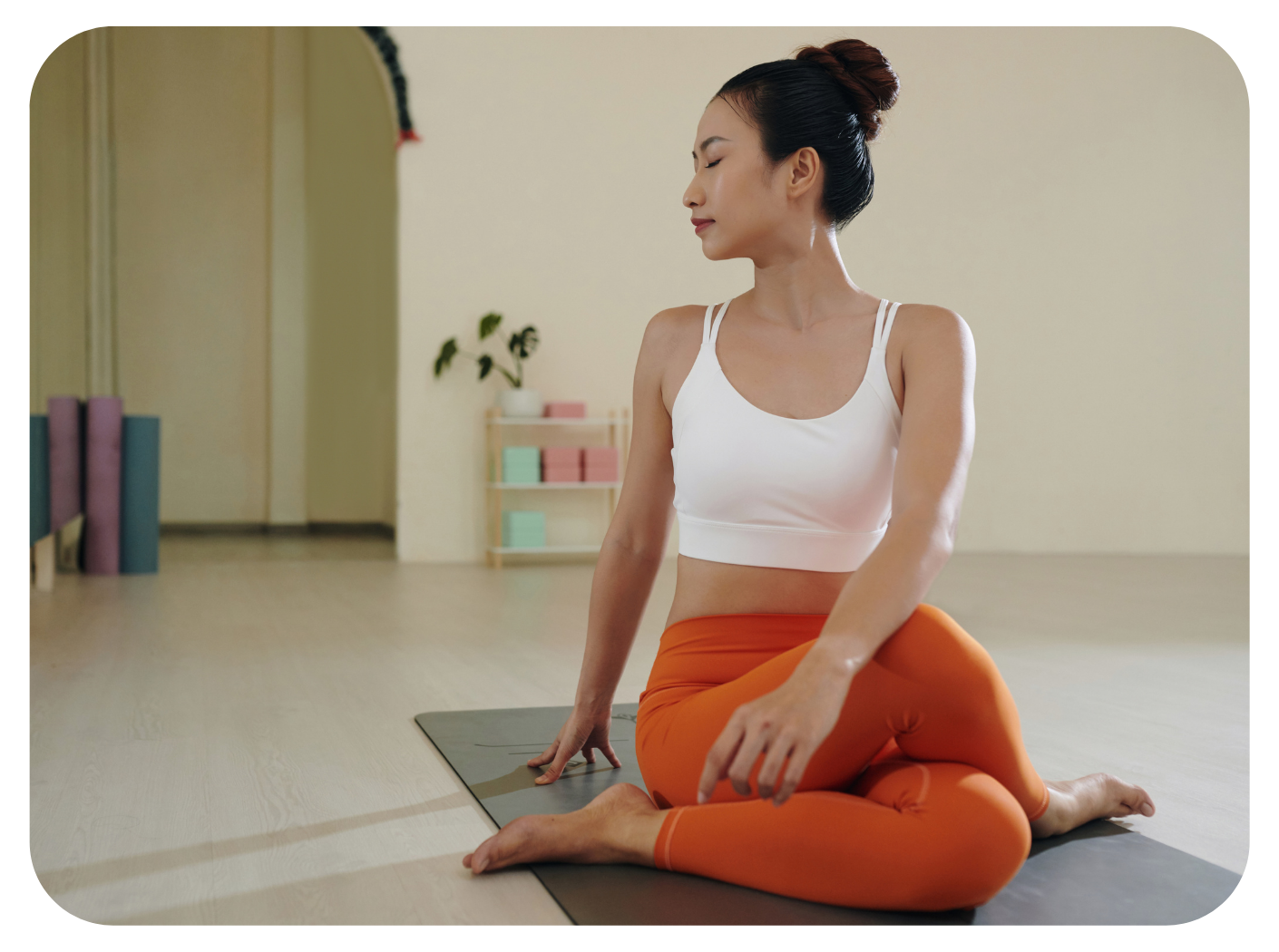
Somatic Yoga uses slow, precise movements to build inner awareness.
How Does Somatic Yoga Work?
Somatic Yoga is a gentle, highly intentional practice that uses slow, precise movements to build inner awareness — or soma, meaning “the living body as experienced from within.”
Common movements include:
Spinal twists
Cat–Cow flows
Pelvic tilts
Sufi grinds
Supported forward folds
Gentle hip openers targeting the psoas and surrounding musculature
These familiar yoga warm-ups are performed with heightened attention to sensation rather than aesthetic perfection. The goal is not to achieve the “perfect pose,” but to observe what the posture evokes internally — the sensations, the emotional responses, the breath patterns, even the thoughts that arise.
For example, during Savasana, a teacher may guide a body scan that invites awareness to where tension resides or how energy flows throughout the body. This subtle shift from doing to sensing is what makes Somatic Yoga uniquely transformative.
The Benefits of Somatic Yoga
By strengthening the mind-body connection, Somatic Yoga can:
Improve coordination and balance
Reduce stress reactivity
Support nervous system regulation
Enhance emotional resilience
Increase serotonin production and elevate mood
Help ease symptoms of anxiety and mild depression
It is particularly beneficial during periods of overwhelm, after poor sleep, or when you feel disconnected from yourself. At its core, Somatic Yoga is an act of self-compassion — a way to gently come home to your body.
My Personal Practice
If, like me, you enjoy practicing at home and on your own schedule, you can explore Somatic Yoga on my go-to yoga platform, Glo, where you’ll find a wide range of somatic yoga classes alongside meditation and Qi Gong sessions. It’s a beautiful resource for building a consistent mind-body practice wherever you are.
Because true wellness does not end when the mat is rolled away, I like to extend the calming effects of Somatic Yoga with a warm cup of SleepTime Super Latte. Made with soothing ingredients like cocoa and ashwagandha — both known for their grounding and adaptogenic properties — it’s the perfect ritual to transition from movement into deep relaxation.
Have you tried Somatic Yoga? We’d love to hear about your experience !
