
Declutter with the Buckets of Thought Meditation
For as long as I can remember, my mornings have followed much the same rhythm, no matter where I am in the world. I splash cold water on my face and drink a warm cup of water—sometimes with chia seeds and a squeeze of lemon—to gently hydrate my body after a night's sleep. Then I head to my meditation space, which during the warmer months is often outdoors, surrounded by nature.
My morning routine rarely changes because it keeps me grounded. What does change, however, is the type of meditation I choose. It depends entirely on how I feel that day. Am I seeking calm, more energy, sharper focus, or simply trying to let go of thoughts that have lingered since the day before?
Thankfully, the meditation platform I use, Glo, offers a wide variety of practices taught by exceptional instructors with wonderfully calming voices.
Become an Active Witness of Your Thoughts
Whenever I find myself stuck in repetitive thinking, I often turn to a meditation called Buckets of Thought. It's a remarkably simple mindfulness technique that helps calm the mind, regulate the nervous system, and create emotional distance from intrusive thoughts.
Rather than becoming a passive observer, this meditation encourages you to become an active witness of your thoughts. Its central insight is both simple and powerful: you are not your thoughts.
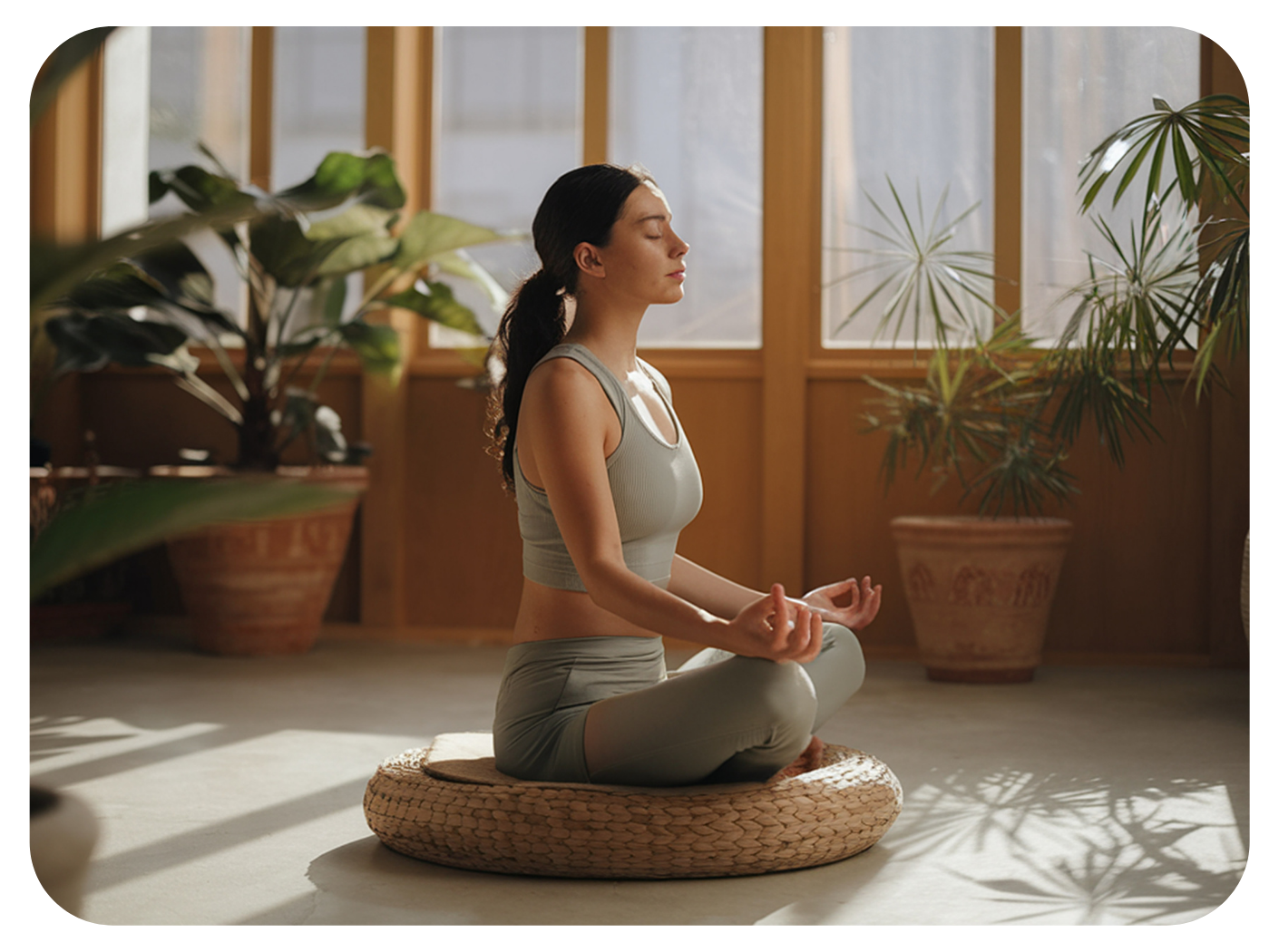
By organizing your thoughts this technique can help you clear the mind.
As thoughts arise, instead of following each one, you acknowledge the emotion attached to it and mentally place it into a "bucket." This gentle act of categorizing creates space between you and your thinking, allowing your mind to settle naturally.
Once you've sorted your thoughts, imagine them as clouds drifting across the sky. Watch them come and go without trying to hold onto them or push them away.
You can create as many buckets as you like—a To-Do List bucket, a Work bucket, a Relationships bucket, or even a Mental Clutter bucket.
Personally, I like to keep it simple. I visualize just two buckets:
The Past — containing everything that has already happened and can no longer be changed.
The Future — holding everything that hasn't happened yet and may never happen at all.
Almost immediately, the mind begins to feel lighter.
How to Practice the Buckets of Thought Meditation
Like any meditation practice, the most important step is finding a quiet place where you won't be interrupted.
Sit comfortably on a cushion or chair with your spine naturally upright.
Close your eyes and take several slow, deep breaths—inhaling through your nose and exhaling through your mouth.
Allow your thoughts to arise naturally without resisting them.
As each thought appears, gently place it into one of your mental buckets.
Then imagine each thought transforming into a cloud floating effortlessly across the sky, carried away by the wind.
Continue breathing slowly until your mind begins to feel more spacious and relaxed.
When you're ready, take a few deeper breaths and slowly open your eyes.
A Practice That Brings Mental Clarity
Like every form of meditation, consistency is what makes this practice truly effective. Over time, it can help declutter the mind, reduce mental overwhelm, and cultivate a healthier perspective on the challenges we face.
Afterward, if a particular thought still feels especially persistent, I often write it down in my journal. Looking at it on paper, from a calmer state of mind, usually helps me see it more objectively.
I like to finish my morning ritual with a soothing latte before moving into a more dynamic yoga practice—or whatever the day has in store.
If your mind often feels busy or overwhelmed, give this meditation a try. You may be surprised by how something so simple can help organize your thoughts, quiet mental chatter, and bring a lasting sense of peace.
