
Millet: A Nutrient-Rich Grain for Any Meal
I recently came back from a lovely retreat on the west coast of Sweden. The weather was absolutely perfect and, after a very hot summer month spent driving around and moving from town to town, I was in deep need of slowing down and cooling off. The summer heat had taken a toll on me, and I was definitely ready for some fresh air to restore my energy.
The peaceful surroundings of the Swedish forest and the fresh, simple food— including eggs straight from the hens—did the job. And although all the meals were made with love and were incredibly tasty, a few things stood out and stayed with me. One of them was a millet salad: simple, fresh, colorful and surprisingly filling.
Millet is an ancient and remarkably resilient grain that can grow in hot, dry and challenging climates, which is one reason it has long been an important staple across parts of Africa and Asia.
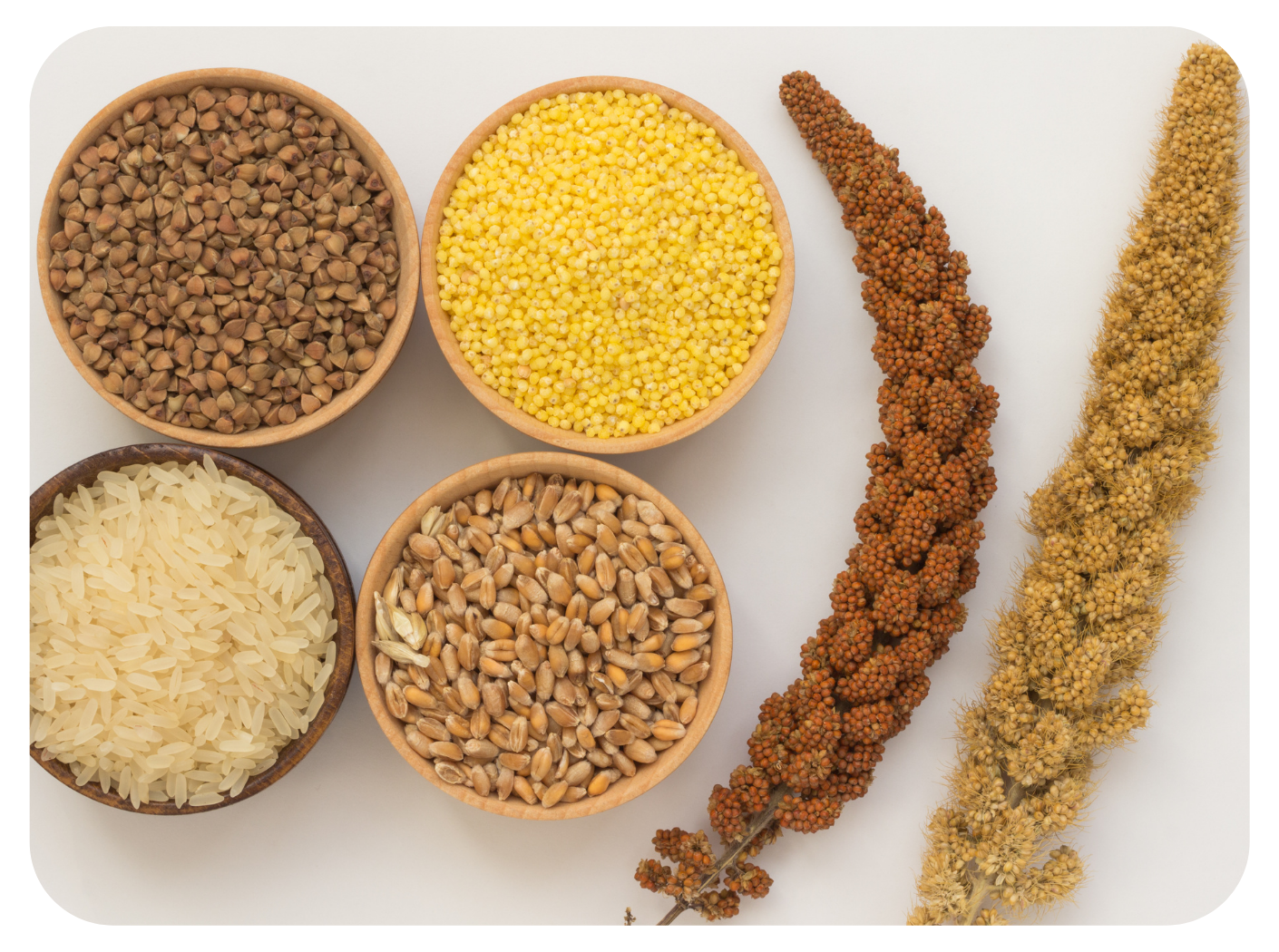
Millet is a resilient, nutrient-rich grain known for its relatively low glycemic impact.
Nutritionally, millet has a lot to offer. Different varieties, including commonly available pearl and finger millet, provide protein, dietary fiber, vitamins and minerals, as well as an array of naturally occurring phytochemicals. These include phenolic acids, flavonoids and other plant compounds known for their antioxidant activity.
Millet is also interesting for its effect on blood sugar. Research suggests that many types of millet have a lower glycemic index than refined grains such as white rice and refined wheat. Its fiber and resistant starch can slow the digestion and absorption of carbohydrates, making millet an interesting whole-grain option as part of a balanced diet.
Some of millet's carbohydrates also escape digestion in the small intestine and reach the colon, where they can be fermented by beneficial gut bacteria. Resistant starch, in particular, can act as a prebiotic substrate, supporting the production of short-chain fatty acids that play an important role in gut health.
The nutritional profile varies considerably between different types of millet. Pearl millet, for example, can be a good source of iron, while finger millet is particularly notable for its calcium content. Research has also investigated millet-based diets for improving iron status in people with iron-deficiency anemia, although millet should be considered part of a nutrient-rich diet rather than a treatment for anemia or osteoporosis.
How I Make Millet
Millet is incredibly versatile and easy to prepare. I make it about once a week, cooking it in water with half a spoonful of turmeric for a warm, earthy flavor and an extra dose of plant compounds.
Once cooked, I toss it with a simple vinaigrette made with lemon, honey and olive oil, along with a little garam masala. Then I add plenty of fresh herbs—parsley, dill and/or cilantro—some pre-soaked raisins, and a mix of hand-ground fennel and cumin seeds.
I usually finish it with grilled halloumi, which adds a delicious salty bite and contrasting texture. But you can easily make it your own: add chickpeas or grilled extra-firm tofu, throw in some arugula, and finish with pecans or another nut for crunch.
It's colorful, satisfying and incredibly easy to put together. Make a larger batch and keep it in the fridge for quick lunches, light dinners or those late-night moments when you want something more nourishing than a snack.
If you are also looking for an easy way to add prebiotics and probiotics to your routine, check out Semaine Health's Pre+Probiotic, made with psyllium husk and organic acacia gum, along with a powerful probiotic blend.
Try millet for yourself—and let us know your favorite way to make it!
