
Color Therapy for Mood, Sleep and Well-Being
Whenever I feel disconnected or anxious, I know it's time to spend some time in nature—or simply look more attentively at the beautiful plants around my home. There is something particularly soothing about green, especially when living in a city.
In fact, one of the first things I consider when moving into a new space is whether there is enough natural light and whether the colors around me create the right atmosphere. Color can influence the way a space feels, from energizing and uplifting to quiet and restorative.
The idea that color can affect our physical and emotional well-being isn't new. Chromotherapy, or color therapy, has roots in traditional healing practices, although many of its therapeutic claims haven't been confirmed by modern scientific research.
Today, however, researchers are beginning to understand much more about how different types and wavelengths of light can affect our circadian rhythm, alertness, skin and even our perception of pain.
Color Therapy in Traditional Healing
In Traditional Chinese Medicine (TCM), colors are associated with the Five Elements and their corresponding organs and emotions. Water is associated with dark blue or black, the kidneys and bladder, and the emotion of fear; wood is associated with green, the liver and gallbladder, and anger.
During certain Qigong practices, a teacher may ask you to visualize a particular color while focusing on an organ or area of the body. While these practices are rooted in traditional philosophy rather than modern clinical evidence, visualization can provide a meditative focus and encourage a greater awareness of the body.
Color also plays an important symbolic role in modern interpretations of the chakra system. The seven chakras are commonly represented by different colors: red for the root chakra, associated with grounding and stability; yellow for the solar plexus, associated with confidence and personal power; and violet or white for the crown chakra, associated with consciousness and spiritual connection.
Light Therapy for Mood and Seasonal Changes
Light becomes particularly interesting during the darker months of fall and winter, when shorter days can affect our circadian rhythm, energy and mood.
Seasonal affective disorder (SAD) is a form of depression that follows a recurring seasonal pattern, most commonly beginning in late fall or winter. One of the established treatments is bright-light therapy, which typically involves exposure to a specially designed light box in the morning.
Daytime light exposure also plays an important role in regulating our internal body clock. Light—particularly shorter-wavelength, blue-enriched light—can promote alertness and suppress melatonin. That's helpful during the day, but exposure to bright light in the evening can delay our natural sleep-wake rhythm and make it more difficult to wind down.
In other words, it's not simply about seeking or avoiding blue light. Timing matters.
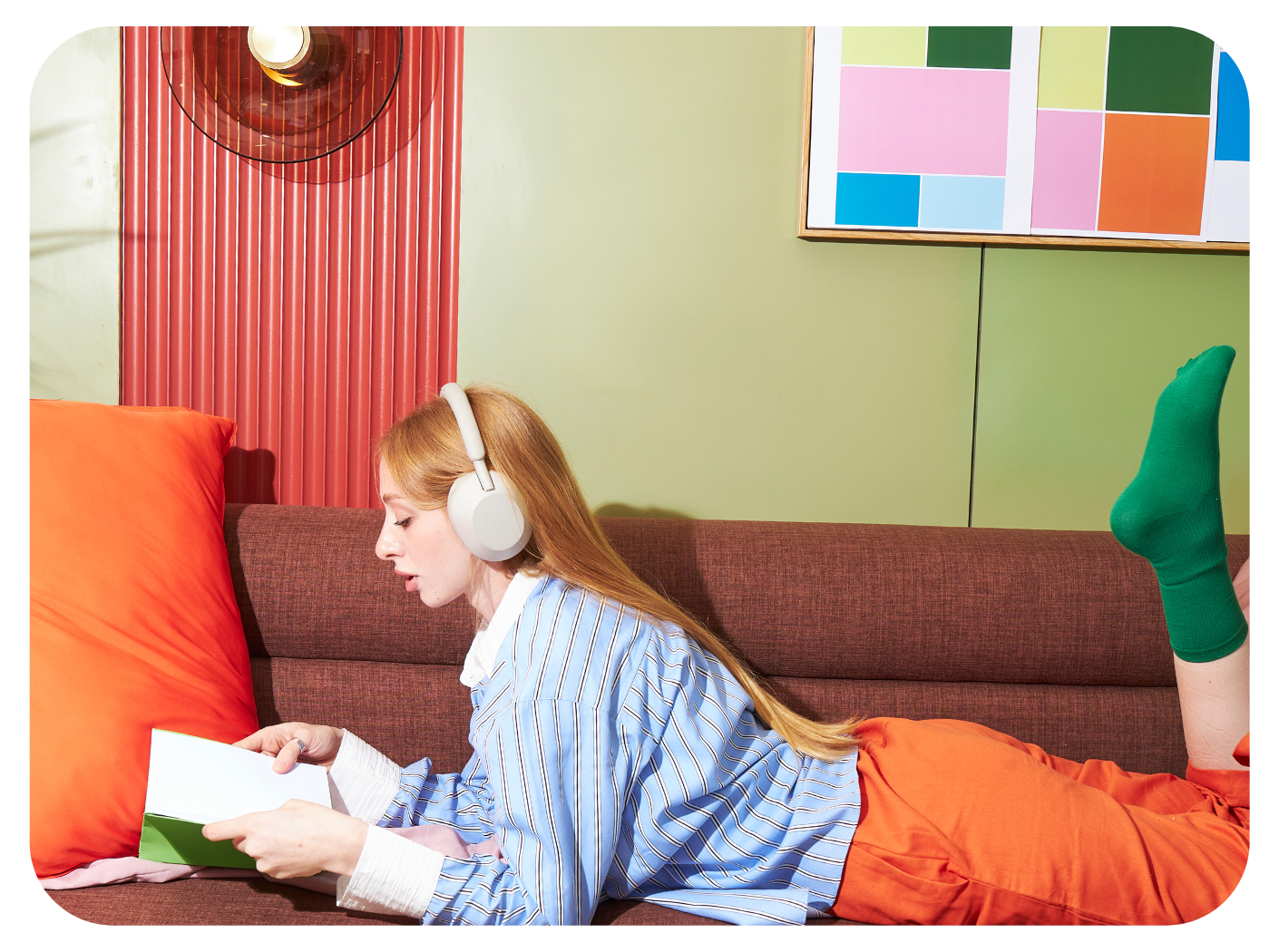
Plants and a colorful palette can boost mood and energize you.
Can Green Light Help With Pain?
Spending time in green spaces has long been associated with relaxation and well-being, but researchers are also investigating whether exposure to green light itself might influence the way we experience pain.
Early studies suggest that green-light exposure may have potential for conditions such as migraine and other forms of chronic pain. The research is intriguing, but still relatively new, and we don't yet know the ideal wavelength, intensity or duration of exposure.
That means sitting beside a green lamp isn't quite the equivalent of taking a walk through a leafy park. For now, I still prefer the real thing whenever possible.
Red Light Therapy for Skin and Muscle Recovery
Red and near-infrared light therapy—also known as photobiomodulation—has a different mechanism from traditional color therapy.
Rather than simply looking at a color, specific wavelengths of red or near-infrared light are directed at the skin and underlying tissues. Researchers are studying photobiomodulation for applications ranging from skin rejuvenation and wound healing to pain and muscle recovery.
There is evidence that certain forms of red-light therapy may influence cellular activity and support collagen production, which helps explain its growing popularity in skincare. Photobiomodulation is also being investigated for its potential to reduce inflammation, support muscle recovery and ease some types of pain.
However, results depend heavily on factors such as wavelength, dose, treatment time and the device being used. More isn't necessarily better.
Creating Your Own Color Ritual
For me, color therapy doesn't have to mean sitting beneath a colored lamp.
It can be walking through a green park, practicing Qigong and visualizing a particular color, filling a room with plants, getting plenty of natural light during the day or lying on my red-light therapy mat when my muscles need a little extra attention.
I often turn it into a small wellness ritual by pairing it with Clevr soothing turmeric and adaptogen Golden latte. Turmeric contains curcumin, a compound that has been extensively studied for its anti-inflammatory properties.
Whether the benefit comes from light itself, time spent in nature, a meditative practice or simply taking a moment to slow down, paying attention to light and color can be another way to create an environment that supports how you want to feel.
Have you tried color or light therapy? Let us know what you've tried and whether you've noticed a difference.
