
Relax and Breathe Better with Tulsi
Whenever I find myself in one of those restless, wired-but-tired moods before bed, a warm cup of herbal tea (or even a soothing latte) usually does the trick. And while I often reach for ashwagandha, one of my favorite calming allies is Tulsi—a powerful adaptogen widely used across India and Southeast Asia, with a distinctive, slightly peppery flavor.
Despite belonging to the same botanical family as Genovese basil—the kind you’d use in pesto or on a margherita pizza—Tulsi (also known as holy basil or the “Queen of Herbs”) is in a category of its own. This vibrant green herb is better suited to herbal infusions and wellness tonics, though it can also elevate certain Asian dishes. Beyond its unique taste, tulsi offers an impressive range of health benefits—especially when added at the end of cooking to preserve its active compounds.
What Are the Benefits of Tulsi?
Tulsi has long been revered as a sacred plant—and for good reason. Regularly sipping tea made from its leaves may help reduce stress and support overall wellbeing.
One of its key active compounds is eugenol, also found in cloves, which gives tulsi its subtle clove-like aftertaste. Eugenol is known for its anti-inflammatory properties (which is why it’s often used in natural dental care) and its ability to support the body’s stress response.
Tulsi also contains ocimumosides A and B, compounds with neuroprotective effects that help regulate brain chemistry. These compounds work on neurotransmitters like serotonin and dopamine, promoting a sense of calm and emotional balance—both physically and mentally.
Another important component is rosmarinic acid, a powerful antioxidant that helps combat oxidative stress and inflammation.
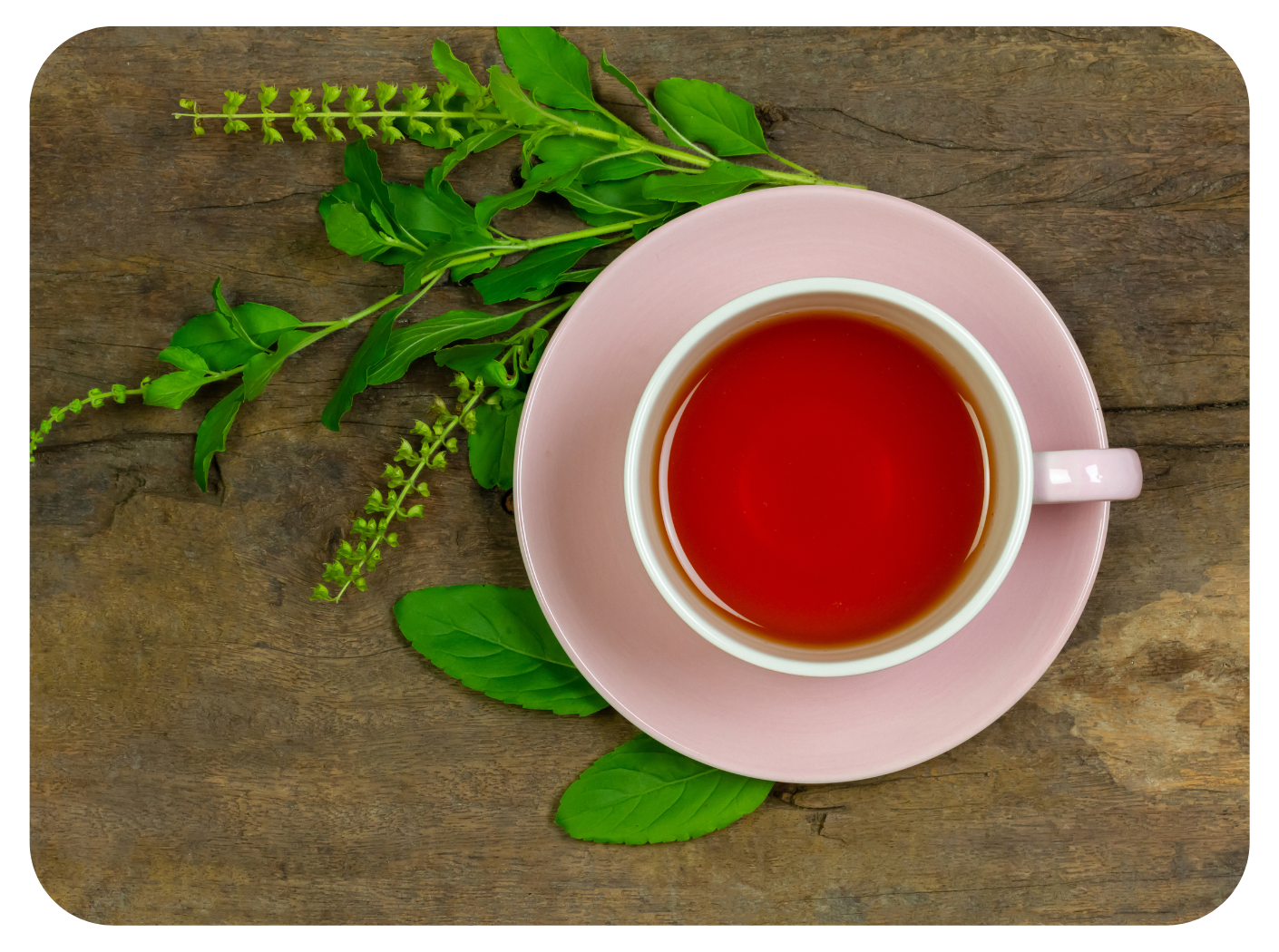
Tulsi’s active compounds are known for their stress-reducing properties.
A Natural Ally for Stress and Hormonal Balance
What makes tulsi particularly interesting is its effect on the hypothalamic-pituitary-adrenal (HPA) axis, the system that regulates how your body responds to stress. By helping to lower cortisol levels, tulsi may support hormonal balance—something especially relevant for women dealing with daily stress, weight fluctuations, or insulin resistance.
Immune and Respiratory Support
Tulsi tea, whether made from fresh or dried leaves, is also traditionally used to support the immune system. It can be especially helpful during seasonal changes, easing symptoms of colds and respiratory discomfort.
Thanks to its ability to modulate inflammatory responses, tulsi may also help calm irritation in the lungs and support overall respiratory health.
Why Add Tulsi to Your Routine?
Whether you’re looking to unwind before bed, support your hormones, or simply incorporate more adaptogens into your daily routine, tulsi is a simple and effective place to start.
And if you’re looking for additional support, formulas like Semaine PMS & The Daily and Menopause Support combine adaptogenic herbs to help regulate mood, metabolism, and hormonal health naturally.
A daily cup of tulsi tea is a small ritual—with powerful benefits. Try it for yourself and notice how your body responds.
