
The Protective Power of Vitamin C Serum
While browsing through a store filled with skincare products, I realized it was time to update my routine in light of my changing hormonal needs. In my 20s, I was never particularly methodical about skincare—but now, I have less of a choice.
While my evening skincare routine is well established, my daytime routine needed some refinement. It’s time to become consistent about applying a few drops of vitamin C serum every morning, just before my SPF 40 moisturizer.
But why is it so important to add a Vitamin C serum to your skincare routine?
Why Vitamin C Is Essential for Skin Protection
When we think of Vitamin C, we often picture a glass of freshly squeezed orange juice. And yes, a diet rich in Vitamin C supports immunity and helps reduce inflammation. However, topical Vitamin C plays a uniquely powerful role in protecting the skin.
Clinical research shows that Vitamin C helps defend against ultraviolet (UV)-induced photoaging and collagen breakdown. In other words, it protects your skin from sun damage at a cellular level.
UV exposure generates singlet oxygen molecules, which trigger the formation of highly reactive free radicals. These free radicals degrade existing collagen, reduce new collagen production, and increase abnormal elastin accumulation—a process known as solar elastosis. Despite its name, this elastin is non-functional and contributes to skin sagging and premature aging.
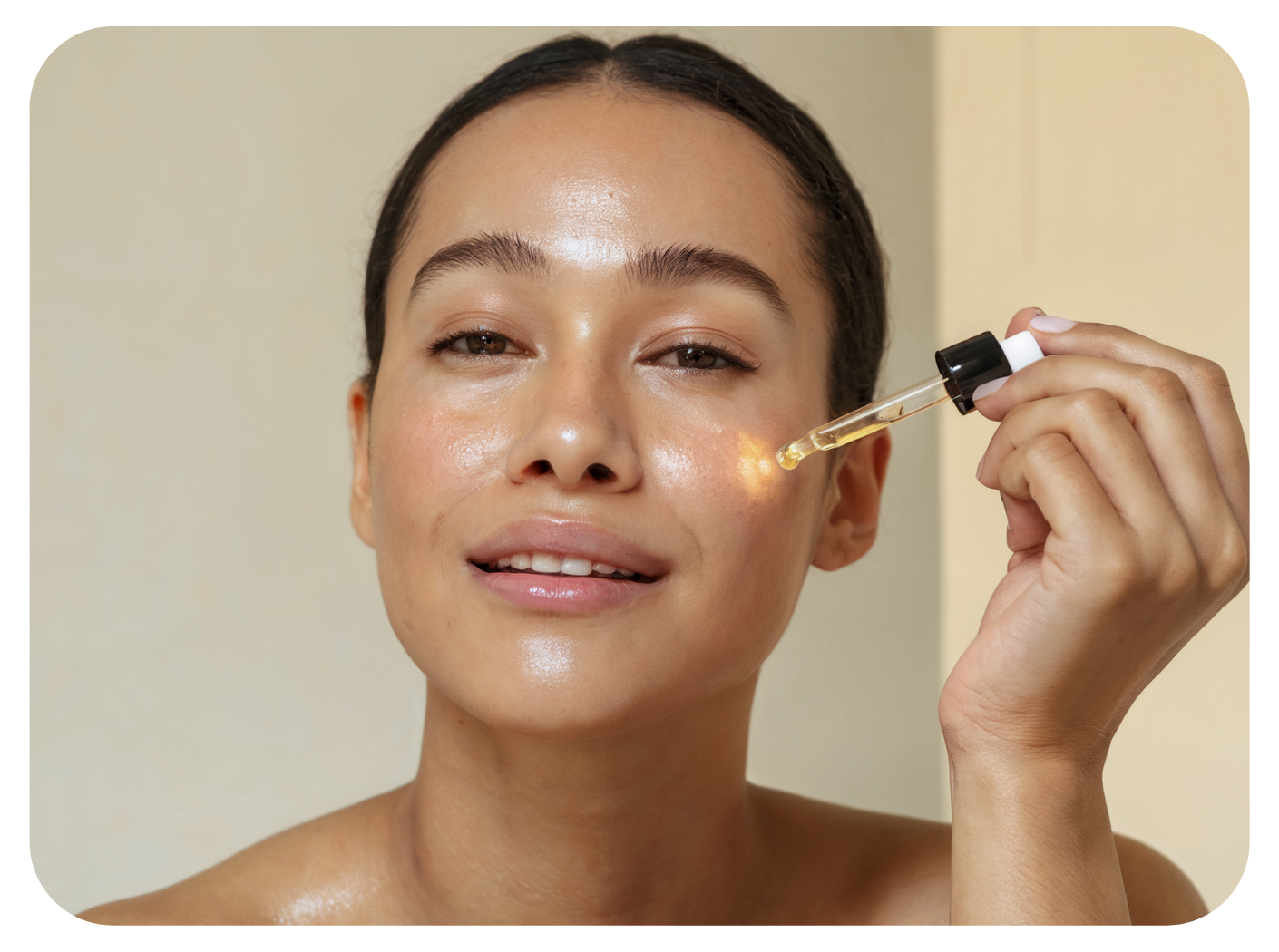
Vitamin C defends against UV-induced photoaging and collagen breakdown.
Why Topical Vitamin C Works Better Than Diet Alone
Although Vitamin C is one of the most abundant antioxidants in the skin, the body cannot synthesize it. Even more importantly, only a small fraction of the Vitamin C we ingest becomes biologically available to the skin.
That’s where well-formulated cosmeceuticals come in.
The most bioavailable form of Vitamin C in skincare is L-ascorbic acid. While naturally unstable and water-soluble (which makes skin penetration challenging), modern formulations stabilize it by:
Lowering the pH below 3.5 to enhance absorption
Combining it with ferulic acid, a powerful plant-derived antioxidant found in oats and rice
Adding complementary antioxidants like Vitamin E to improve stability and efficacy
These innovations allow Vitamin C to penetrate the dermis effectively and deliver its full photoprotective benefits.
How to Use Vitamin C Serum in Your Morning Routine
Here is a simple, effective daytime skincare routine:
Cleanse your face with a gentle, high-quality cleanser
Pat dry (avoid rubbing)
Apply a few drops of Vitamin C serum
Allow it to absorb fully
Follow with a moisturizer containing SPF to amplify protection
Vitamin C and sunscreen work synergistically—together they provide stronger protection against oxidative stress and UV damage than either alone.
What to Look for in a Vitamin C Serum
For optimal results, choose a serum with:
A concentration between 8% and 20%
Below 8% may not be biologically significant
Above 20% increases the risk of irritation
L-ascorbic acid as the primary ingredient
Stabilizing antioxidants such as ferulic acid
Consistency is key. Daily application delivers cumulative protective and collagen-supporting benefits.
Beauty From the Inside Out
Adding a Vitamin C serum to your morning routine is one of the most effective steps you can take to prevent photoaging, support collagen production, and maintain radiant, resilient skin.
While topical antioxidants are essential, internal support matters too. A diet rich in colorful fruits and vegetables provides vital antioxidants that support skin health from within.
You can also consider targeted supplementation like Semaine Hair & Skin with astaxanthin—one of the most powerful antioxidants found in nature—along with collagen and biotin to support hair and skin vitality.
Try this skincare upgrade and let us know how your skin responds.
